LPC 7. Arrays
Last Edit: 2/22/25
很多情况下,需要连续处理多个值,而分别给他们赋值则显得特别麻烦,于是就需要一种更加高效的数据结构
7.1 Why and how to use arrays ? #
- 假设现在需要统计全班 400 个人的成绩,不可能创建 400 个 Varibale 将成绩和名称一一赋值,更高效的做法是创建一个 Array
- 通过
int grades[7]就可以 Declare 一个 Array
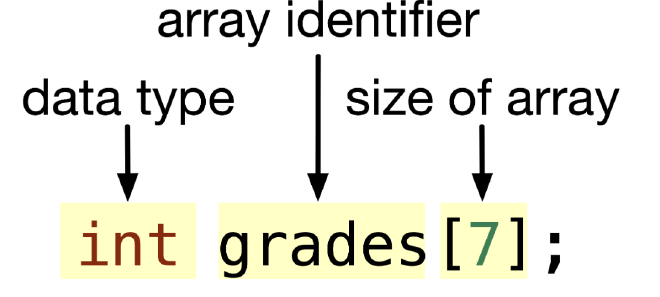
- 想要挨个指定 Array 内 Element 的值,则需要挨个指定
grades[0] = 100;
grades[1] = 95;
grades[2] = 67;
grades[3] = 99;
grades[4] = 72;
grades[5] = 101;
grades[6] = 200;
- 在 C 语言中,访问 Array 的第一个值,需要用 0 作为 Index
- 如果不想要一一赋值,可以直接 Initialize Array,直接 `int grades[7] = {100,95,67,99,72,101,200} 就可以完成定义并赋值
- 对于 Array 来说,他的 Size 在整个程序中都是固定的,定义他的大小的方式有很多种
#define SIZE 7

int main(void) {
  int arr[SIZE];  // 等价于 int arr[7];
  int x = SIZE;   // 等价于 int x = 7;
  return 0;
}
- 使用 Macro
#define作为宏定义,他的作用是给 7 取了个 Alias 别名 叫做SIZE,这样在运行的时候,所有SIZE都会被替换成 7
int main(void) {
  const int Size = 7;
  int arr[Size];  // 在某些编译器中可能不合法
  int x = Size;
  return 0;
}
- 或者常规的使用
const来定义
ex. Find Avg of an array #
- 整体思路就是累加 Array 的每一个元素,后将和处以元素个数
#include <stdio.h>
#define SIZE 7
int main(void){
  int grades[SIZE] = {100, 95, 67, 99, 72, 101, 200};
  int sum = 0;
  double avg = 0;
  for (int index = 0; index < SIZE; index++){
    sum = sum + grades[index];
  }
  avg = (double) sum / SIZE;
  printf("Average is %.2lf", avg);
  return 0;
}
- 对于上面的常规遍历操作,会出现以下常见问题
Array Index Range Error #
- 想要遍历整个 Array,正确的 index 应该是
0到SIZE - 1,也就是说 Array 的最后一个元素是SIZE - 1,若遍历为index <= SIZE则会出现越界错误 - 同样的,Array 的 start point 也是
index = 0,要从 0 开始不然无法访问到第一个元素 - 还有就是要将
sum定义成double类型以确保除法不会出现精度问题
7.1.1 ex. Reverse the Elements in an Array #
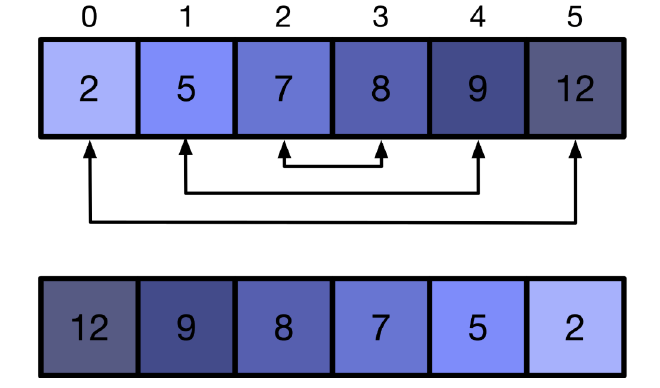
- 这里有很多种方法,书中采取了 Swap 的办法,即把 Low 和 High 配对然后 Swap
#include <stdio.h>
#define SIZE 6
int main(void){
  int arr[SIZE] = {2, 5, 7, 8, 9, 12};
  for (int index = 0; index < SIZE; index++){
      printf("%d, ", arr[index]);
  }
  printf("\n");
  for(int low = 0, high = SIZE - 1; low < high; low++, high--){
    int temp = arr[low];
    arr[low] = arr[high];
    arr[high] = temp;
  }
  for (int index = 0; index < SIZE; index++){
    printf("%d, ", arr[index]);
  }
  printf("\n");
  return 0;
}
7.1.2 Summary of Important Features of Arrays #
- 以下总结了一些重要的 Array 的注意事项
- 第一个元素从 Index = 0 开始
- 当 Declaring Array 的时候,不是一定需要将
SIZE给到[]中,因为 Compiler 编译器会自动计算 Array 中的元素个数 - 当 SIZE 大小大于实际元素的时候,如
int array [5] = {1,2}的情况下,实际上它相当于int array [5] = {1,2,0,0,0}的效果,不会报错 - 同样的,当 SIZE 小于实际元素的时候,如
int array [5] = {1,2,3,4,5,6}的情况下,程序会提示warning: excess elements in array initializer - 当访问的 index 超出 Array 有的 Elements 个数的时候,会得到 Segmentation Fault
7.2 What are arrays, and how are they stored ? #
- 当使用 Array 的时候,所有元素会被 Contiguously Stored in the main memory
- 假设有
int x[3] = {1,7,3},首先这是一个intArray,而一个int在 Memory 中会占用 4 Bytes,所以从 Array 的第一个 Element 开始,每一个 Element 都会间隔 4 个 Bytes
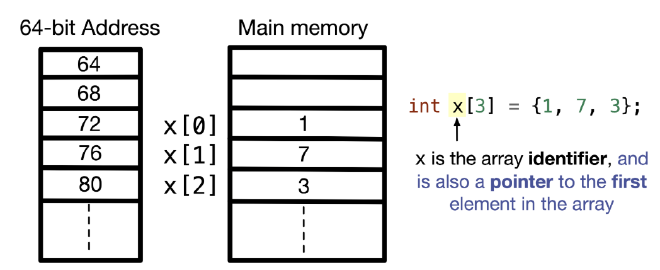
- 既然 Elements 之间是 Contiguously 的,那么可以发现,Array 自身的名字本质上就是一个指向 Array 中第一个元素的 Pointer,即
x == &x[0] - 既然 Array 的本质就是 Pointer,那么就有
x+1等价于&x[1],总结就是
x[i] == *(x + i) == *( &x[i] )
- Array 的第 i 个元素等价于
x+i的解引用等价于 Array 的 index 为 i 的元素的 Address 的解引用
7.2.1 Pointer Arithmetic #
- 明白了 Array Identifier 是一个指向第一个 Element 的 Pointer 后,Pointer Arithmetic 在理解 Array 中的 Elements 是如何连 Contiguously Stored 在 Memory 中有很重要的作用
简单来说,Pointer 和正常的 Variable 不一样,它有着自己的加减乘除方法
- 假设有一个
int x[] = {1,7,3},现在有如下代码
#include <stdio.h>
int main(void) {
    const int size = 3;
    int x[size] = {1, 7, 3};  // 定义数组 x
    int *q = &x[2];           // 指针 q 指向 x[2]
    int dist = q - x;         // 计算指针之间的偏移量
    printf("Dist is %d\n", dist); // 输出偏移量
    return 0;
}
- 注意这里的 dist 是两个 Pointer 之间的差而不再是普通的值运算,他的值为 $$Dist =\frac{80-72}{4}$$
- 这是因为 Pointer 之间的加减运算以 Data Type 作为单位,而不是 Bytes,或者说 Pointer 之间计算的差值为 Number of Elements 而不是 Address 的 Bytes Difference
- 这里由于一个
int为 4 Bytes,所以需要处以 4 作为单位长度
7.3 How do we pass an Array to a function ? #
- 在 C 语言中,将 Array 传递给 Function 实际上是传递 Array 第一个 Element 的 Pointer 给到 Function 中,这意味着,Array 本身并不会被复制,因为 Function 接收到的是 Pointer 指向的 Address,Function 内部对 Array 的修改会影响到原 Array,因为他们用的是同一块 Memory
#include <stdio.h>
double f(int []); // 声明函数,接受一个整数数组

int main(void){
    int x[3] = {1, 7, 3};  // 定义一个数组
    double result = f(x);  // 传递数组 x 给函数 f
    return 0;
}
double f(int list[]){  // 这里 list[] 实际上是指针
    // statements;
}
7.3.1 Size of array in a function is unknown #
- 前面提到了,Array 作为一个参数被传入的时候,本质上是传入了指向 First Element 的 Address 的 Pointer,这导致了 Function 并不知道 Array 的实际大小
- 这就使得想要让 Function 知道 Array 的 Size,必须将 Size 也作为参数传入
#include <stdio.h>
int sumData(int[], const int); // 函数声明
int main(void){
    int x[3] = {1, 7, 3};  // 定义数组
    int result = sumData(x, 3);  // 传递数组和大小
    printf("Sum of elements in the array: %d.\n", result);
    return 0;
}
int sumData(int list[], const int size) {
    int sum = 0;
    for (int index = 0; index < size; index++) {
        sum = sum + list[index];  // 累加数组元素
    }
    return sum;
}
- 可以发现在
int sumData(int[], const int);部分,指定了 Size 作为参数的传入
7.3.2 Can I use the pointer syntax too ? #
- 因为 Array Identifiers 本质上是 Pointer,所以在 Function 内部,
*(list + index)也和list[index]等效
#include <stdio.h>
int sumData(int*, int); // 使用指针表示数组参数
int main(void) {
    int x[3] = {1, 7, 3};
    int result = sumData(x, 3);  // 传递数组 x
    printf("Sum of elements in the array: %d.\n", result);
    return 0;
}
int sumData(int* list, int size) {
    int sum = 0;
    for (int index = 0; index < size; index++) {
        sum = sum + *(list + index);  // 使用指针偏移代替数组索引
    }
    return sum;
}
- 可以看到
sumData(int*, int);直接声明了接受 Pointer,而在 Function 内部则通过偏移量来遍历 Array - 这也说明了
int list[]和int* list的等效,无论用这两个的其中哪一个,他们都指向的是x[0]所对应的 Address
7.3.3 Are we passing the array by value or by pointers ? #
- 下面的例子在其强调了对 Array 的操作都是基于 Address 的特殊性
#include <stdio.h>
void swap(int[], int, int);  // 交换数组中两个元素
void printArray(int[], const int); // 打印数组元素

int main(void) {
    int x[5] = {3, 5, 8, 1, 7};
    printf("Before swapping: ");
    printArray(x, 5);

    swap(x, 0, 4); // 交换 x[0] 和 x[4]

    printf("After swapping: ");
    printArray(x, 5);

    return 0;
}

// 交换 list[i] 和 list[j]
void swap(int list[], int i, int j) {
    int temp = list[i];
    list[i] = list[j];
    list[j] = temp;
}

// 遍历并打印数组
void printArray(int list[], const int size) {
    for (int index = 0; index < size; index++) {
        printf("%d ", list[index]);
    }
    printf("\n");
}
- 这就说明了代码中,无论是
x还是list,拿到的都是同一个 Array 的同一系列地址